
The Asian Football Confederation has confirmed Indonesia's immediate ban from all international football, including next week's 2018 World Cup qualifiers, because of government meddling in the country's domestic league.

'There are only two bottlenecks for universal vaccination.' 'One, is availability of the vaccine.' 'Two, is the logistics for administering the vaccine.'

Given our troubled relationship with Pakistan, we need to keep our security apparatus in a state of alert with state-of-the-art equipment. All bilateral issues with Pakistan -- political, military, economic -- will simply have to go on the back-burner till Pakistan decides it wants to live as a good neighbour, says Vikram Sood.
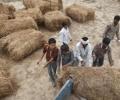
The agrarian crisis must be met with similarly speedy responses.

Prime Minister Narendra Modi has been voted as the seventh most popular leader in the world in a new poll topped by US President Barack Obama.

She also addressed the Indian Community at a reception held in her honour in Jakarta.
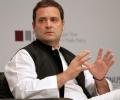
Earlier at the University of California, Berkeley Gandhi had said that Modi had caused "tremendous damage" to India's economy with his "reckless and dangerous" decisions like demonetisation and "hastily-applied" GST.

On her last day as India's envoy to the United States, Ambassador Nirupama Rao was felicitated by the Barck Obama administration at the State Department on Monday, with US Secretary of State John F Kerry thanking her for her service toward furthering the strategic partnership between the two nations.

As West Bengal, Kerala, Assam, Tamil Nadu and Puducherry prepare for new administrations, one is reminded of the disparity that runs through the veins of the Indian states, notes Mihir S Sharma.
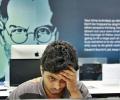
Morgan Stanley writing down its investment in the e-commerce leader by 27 per cent does not augur well for the sector.
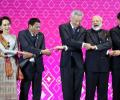
The prime minister also welcomed convergence of views between India and ASEAN for cooperation in the Indo-Pacific region.

Indians want change and progress. They should be willing to accept tough decisions, says Sanjeev Nayyar.

Modi held talks with Abe after arriving in the Laotian capital to attend the Association of Southeast Asian Nations-India and the East Asia summits that will take place on Thursday.
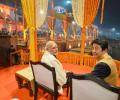
'Modi and Abe are working seriously for India-Japan bonhomie to grow stronger.' 'It is a win-win situation for both countries and the future look promising,' says Rajaram Panda, the Indian Council for Cultural Relations India Chair Visiting Professor at Reitaku University, Japan.
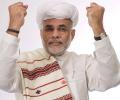
Two former senior United States diplomats, with more than 60 years experience in South Asia between them, have exhorted Washington to establish communication with Bharatiya Janata Party's prime ministerial candidate Narendra Modi sooner than later.

Just an hour or so from the ones we commonly throng to, they promise a lot more for a lot less.

He suggested evolving specific plans for cooperation with the 10-memeber grouping in key areas of maritime security, counter-piracy and humanitarian and disaster relief.

'Unity in diversity is a dated notion as India, today, is more unified and cohesive and yet more pronouncedly diverse than ever in its history,' argues Shekhar Gupta.

The 2 countries signed 15 agreements including one on defence cooperation after Prime Minister Narendra Modi held 'productive discussions' with President Joko Widodo.
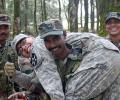
'The interests of the United States and India are sharply aligned on the issue of Pakistan-based terrorism.'
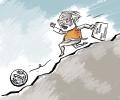
'Without bold action to deal with our banking crisis, count on the economy's doldrums to continue for much longer than most of us anticipate,' says Rahul Jacob.

The US has been, historically, a sleeping partner in India-China relations. Today, any attempt by the Modi government to make a bilateral move to improve relations with Beijing could upset Biden's apple cart, notes Ambassador M K Bhadrakumar.

If the aim is to become a player with some strategic space of its own, not just in the Indian Ocean region but also in the adjoining region, then greater interaction with China is desirable, even necessary.
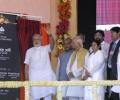
At least 13 attempts were made earlier at modernising.

It is currently scouting for suitable firms in Europe and planning to close the deal some time this year, a top company executive said.
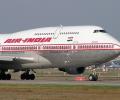
Prime minister-elect Narendra Modi's first official visit as head of government will likely be to Dhaka, where he is expected to sign the much-awaited Teesta water-sharing agreement with Bangladesh Prime Minister Hasina.
.jpg)
Bodh Gaya emerged as a centre that encouraged a continuous dialogue of civilisation, it has enabled India to re-forge her age old linkages with countries, who derived inspiration from Buddha's message of compassion. It is this dialogue that was sought to be interrupted by the dastardly attack, says Dr Anirban Ganguly.

Arvind Singh, a member of Mahabodhi temple management committee, said the two injured included a national of Myanmar and another of Tibet. They have been admitted to the Magadh MedicalCollege and Hospital, he said

'We have a common way of looking at the world, a common way of thinking, and a common set of values that predispose us to be partners. And our interests overlap greatly,' Dr Ashton B Carter, America's next defence secretary, told Aziz Haniffa/Rediff.com in an exclusive interview.

GE Healthcare has already filed five global patents for its design.

'China, which had earlier blockaded New Delhi's bid to join the Nuclear Suppliers Group by citing the nuclear non-proliferation law, finds itself in an awkward position and international isolation.' 'India needs to pursue a policy of mediation between China and the Southeast Asian countries for regional security,' says Srikanth Kondapalli.

Every day at 9 am, five 20-somethings who live in a 4-bedroom apartment in Bengaluru have a session with their physical trainer. After a workout, they spend the next 8 to 10 hours in their spacious living room, headphones in place and computer screens in front of them. Their salaried job: To play video games for the rest of the day.

China's intended role for AIIB is not so different from the existing Western lenders like the World Bank.

Entrepreneurship hasn't been a cakewalk for him, says Sinha.

'The military in Pakistan is capable and self critical, but intelligence is stuffed full of lifers who resist change, which is why career soldiers in Pakistan try with all their might not to be transferred into the ISI.'

The 'Missing link in India's Act East Policy', as India's former foreign secretary Shyam Saran calls it, needs to be filled sooner rather than later, says Dr Rahul Mishra.

The soul of India resides in pluralism and tolerance. This plurality of our society has come through assimilation of ideas over centuries. Secularism and inclusion are a matter of faith for us. It is our composite culture which makes us into one nation.

The airline has also inked a deal to take 12 A320s from Singapore's Tiger Airways on lease.

A United Nations human rights investigator has recommended that international pressure be put on North Korea as part of a multi-pronged strategy to know the fate of hundreds of foreign nationals allegedly abducted by it.

Taking to Twitter, the army said its mountaineering expedition team spotted the 'mysterious' footprints on April 9 close to Makalu Base Camp.
